

Snooping on Poop in NM: A surprising tool to combat measles
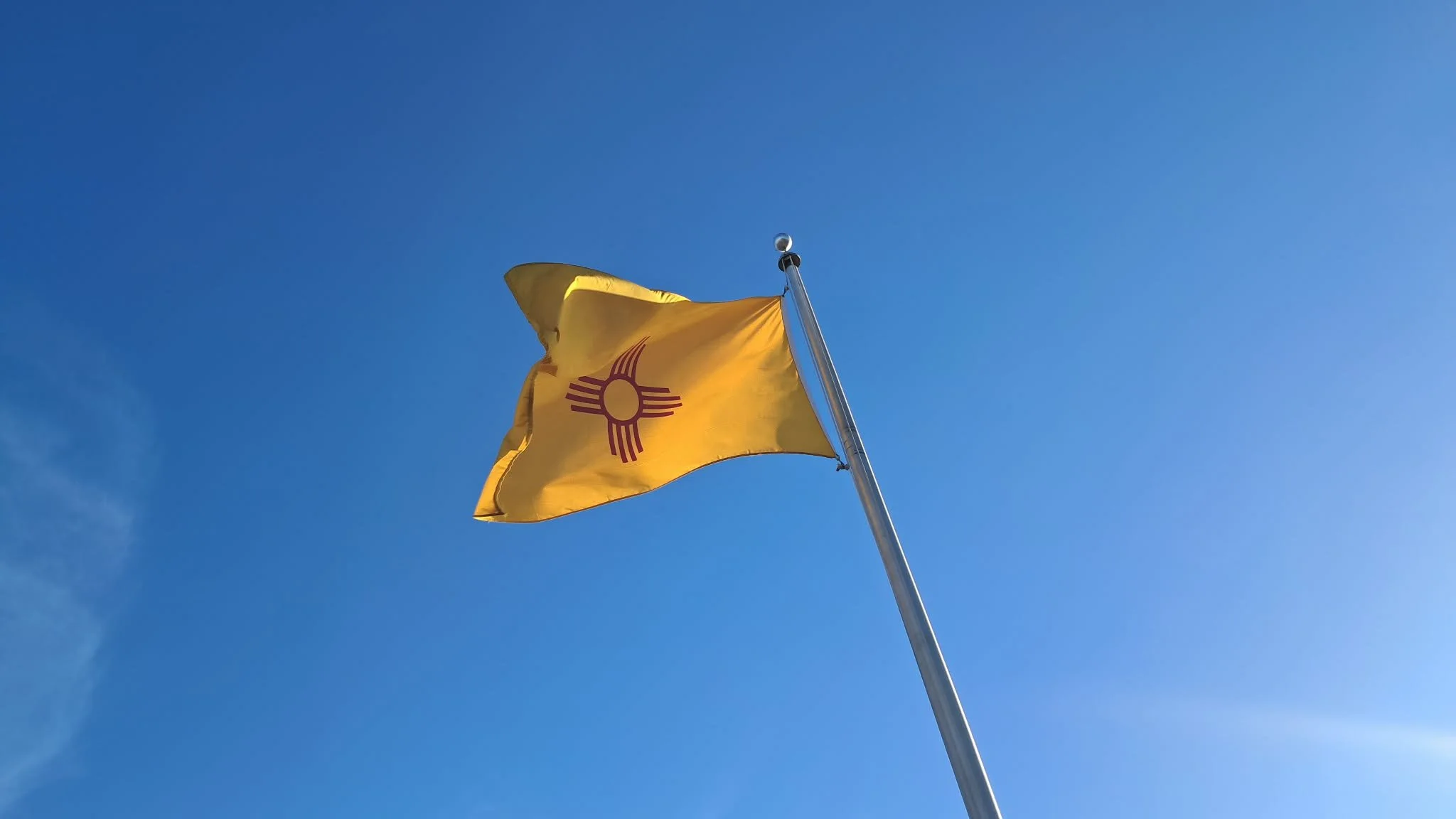
New Mexico health department officials work in partnership with local governments to sample and test wastewater for early detection of measles cases in communities across the state, including Southern New Mexico. (Photo by Diana Alba Soular/ SNMJC)
How watching wastewater helps prevent disease spread
SOUTHERN NEW MEXICO – In the late spring of 2025, as measles cases surged in Texas and New Mexico, officials at the New Mexico Department of Health picked up a warning signal that the outbreak had spread to the western part of the state. The signal was not from on-site patient testing, but from a wastewater treatment plant in Luna County.
Before any confirmed measles cases were reported in Deming, fragments of the virus were flowing through municipal sewer systems. The early detection gave health officials a head start to alert doctors, lower testing thresholds and prepare for a potential outbreak in the communities surrounding Luna County.
“It gives us a really good early warning system so that we have five days to a week to respond before cases start popping up,” said Kelley Plymesser, head of wastewater-based epidemiology for the NMDOH. “It’s been really useful for the measles outbreak response.”
The early detection was eventually linked to an outbreak at the Luna County Detention Center. The outbreak peaked at 14 total infections, with zero hospitalizations or deaths reported.
The state’s experience is an example of how wastewater surveillance can be used to detect diseases in an era of surging vaccine skepticism. And the program could be helping to reduce illness and save lives, given that positive tests allow for stepped-up and faster public health responses.
Wastewater monitoring for COVID
According to Plymesser, wastewater monitoring began at the beginning of the COVID-19 pandemic, with site-specific testing at different health and detention facilities conducted by the New Mexico Environment Department. However, in 2022, the monitoring program expanded to 12 different facilities across the state that test for a number of different diseases, including measles, West Nile virus, dengue fever, flu and RSV. And while not every treatment plant tests for every single disease, measles testing is consistent across every facility.
“Everybody is getting tested for measles, and that’s ongoing because of the outbreak in our neighboring states,” Plymesser said.
The measles outbreak that lasted for much of 2025 in New Mexico has been declared officially over because case counts declined. But health experts say the risk of more cases remains due to lagging vaccination rates across the region. As of March 4, six new measles cases have been reported for 2026 in detention centers in Doña Ana, Luna and Hidalgo counties.
The state partners with 12 wastewater treatment plants across the entire state that collect samples twice weekly and send them to a lab for analysis. The NMDOH covers shipping and testing costs, while local utilities voluntarily collect the samples, according to Plymesser.
In Las Cruces, lab personnel collect samples twice a week using kits supplied by the state program, according to Deputy Director of Wastewater Utilities Joaquin Murillo.
“We basically grab a 24-hour composite sample, pack it into a cooler with some ice kits, and prepare the sample bottles,” he said. “We are required to gather samples daily as part of our NPDES permit requirements. So this is basically just a small add-on to what (our personnel) were already doing.”
He referenced the National Pollutant Discharge Elimination System, a federal permit program that monitors entities discharging wastewater into waterways.
‘Something that’s going to benefit our communities’
While the additional sampling does require some extra labor, Murillo said it hasn’t strained the department’s staffing.
“Our lab personnel are fully qualified lab technicians,” he said. “So this wasn’t anything out of the ordinary that they’re not used to already performing.”
Even so, for a wastewater department like the one in Las Cruces, the science behind the testing has been eye-opening.
“I think it’s a great program,” Murillo said. “This is something that’s going to benefit our communities and our state.”
Plymesser said the first wastewater detection of measles during last year’s outbreak occurred in Sandoval County, north of Albuquerque, setting the stage for what was to come for other parts of the state.
“Sure enough, a week later, our first measles case in (Sandoval County) popped up,” Plymesser said. “So that gave us a better idea of how to respond when we had wastewater detections of measles in other counties like Luna County, where there were no known cases. So when we got the positive wastewater detection for measles in Deming, it coincided with some suspect cases at the Luna County Detention Center.”
Sampling gives early warnings
Plymesser said that having a positive detection in wastewater confirmed suspicions and helped lower the threshold for testing in the area, meaning that residents in the area no longer had to meet the full clinical and exposure criteria typically required to get a measles test. Shortly after the positive wastewater detection, positive measles cases were confirmed.
One of the biggest advantages of wastewater monitoring is just how sensitive the tests are when it comes to detecting diseases.
“In Sandoval County, when we had that first detection, it was one known case in a sewer shed of about 101,000 (people),” Plymesser said. “So that was pretty amazing.”
The measles testing for the NMDOH was initially conducted by researchers at Rice University. Later, testing shifted to the Translational Genomics Research Institute (TGen) in Flagstaff, Arizona.
Dr. Crystal Hepp, an associate professor at Northern Arizona University and TGen, said wastewater surveillance captures a broader slice of the population than clinical testing ever could.
“When people get a cold or get the flu, some people might actually get tested for it, but some people might not even know that they’re sick with a particular virus,” Dr. Hepp said. “What wastewater allows for is a better understanding of pathogens that are circulating in the entire population over time and space.”
Because wastewater captures viral shedding from symptomatic and asymptomatic individuals alike, it can detect circulation even when certain segments of the population aren’t seeking medical care. And while the data is great for initial detection and estimations, it’s not a replacement for clinical data that can give hard numbers of how many individuals are infected.
“That’s really hard if you’re trying to get absolute numbers,“ Hepp said. “Different people are going to shed different amounts of different pathogens.”
On top of this, wastewater is a challenging environment for detecting viruses because it’s biologically complex and full of compounds that interfere with testing. Dr. Hepp’s lab has been a part of the effort over the years to advance testing methods and accuracy.
“Feces has a lot of what we call inhibitors,” she said. “And those inhibitors make it very hard to detect viruses when they’re present. And so we’ve had to figure out how to use different chemical reagents to try to decrease those inhibitors and then increase our sensitivity to detect viruses.”
State dashboard gives virus insights
The data’s power derives from identifying whether viral levels are rising or falling in any given community. Wastewater data in New Mexico is publicly available through the NMDOH Wastewater Dashboard, allowing residents to track infection trends of COVID-19, RSV, influenza, and measles. Plymesser said that some residents even use it to measure risk before making personal decisions.
“I have had constituents email and thank me and say, ‘This is how I decide whether or not to mask when I travel or when I go to the grocery store,’” she said.
And while the trends don’t give exact data on the number of infected individuals, Plymesser said that the data typically tracks closely with clinical reports, but is slightly ahead. That lead time can be crucial in containing a highly contagious disease like measles, which the CDC describes as one of the most contagious viruses known.
The United States achieved measles elimination status in 2000, meaning that there was no continuous year-round transmission. But outbreaks linked to declining vaccination coverage are now threatening that status.
According to a Gallup poll, vaccine skepticism in the U.S. has been growing for decades, and many experts believe the federal government itself is undermining the public’s confidence in vaccines by reducing the number of immunizations recommended for all children and promoting false information suggesting that vaccines could cause autism. Also, U.S. Secretary of Health and Human Services Robert Kennedy Jr. gutting the CDC’s vaccine advisory panel and replacing them with a number of individuals who have expressed skepticism in vaccinations.
A cost-effective approach
As skepticism climbs and measles outbreaks become more common across the country, finding other ways to detect and combat outbreaks effectively is becoming more essential to public health officials.
With this in mind, Plymesser said that wastewater monitoring during New Mexico’s outbreak was relatively inexpensive.
“I think we probably, over the course of the whole outbreak, we spent about $14,000 on measles testing across the state in the wastewater,” Plymesser said.
That figure covers laboratory testing testing, but not the broader outbreak response. Compared to the costs of large-scale individual testing, contact tracing and hospitalizations, wastewater monitoring offers what Plymesser described as an “economically efficient way to monitor for infectious disease.”
“We’re capturing a whole community,” she said. “We’re not having to test each individual in a community to pick up a signal.”
The program is currently funded through 2029 through CDC support. Plymesser said state officials are optimistic that federal funding will continue due to how effective it’s been over the past few years.
“As people’s vaccination behaviors start changing or people aren’t seeking the same kind of medical care that they did before, we are still able to monitor for diseases in a different way,” Plymesser said.
Wastewater monitoring boosts understanding
Dr. Hepp shared the sentiment that wastewater works best as part of a broader public health framework.
“Wastewater-based epidemiology is really meant to complement other public health tools,” she said. “It’s just another added layer to help us understand.”
In an age when trust in vaccines is declining and outbreaks can spread rapidly, New Mexico’s public health system suggests the sewers may offer one of public health’s clearest early warning signs for dangerous pathogens.
This reporting was made possible thanks to a grant from the Puente News Collaborative, based in El Paso.
Places With Wastewater Monitoring for Measles in NM
1. Roswell
2. Chaparral
3. Las Cruces
4. Rincon
5. Deming
6. Portales
7. Lordsburg
8. Carlsbad
9. La Mesa
10. Santa Fe
11. Rio Rancho
12. Albuquerque
Source: New Mexico Department of Health Wastewater Dashboard