5 takeaways from a sexual-assault panel discussion at NMSU
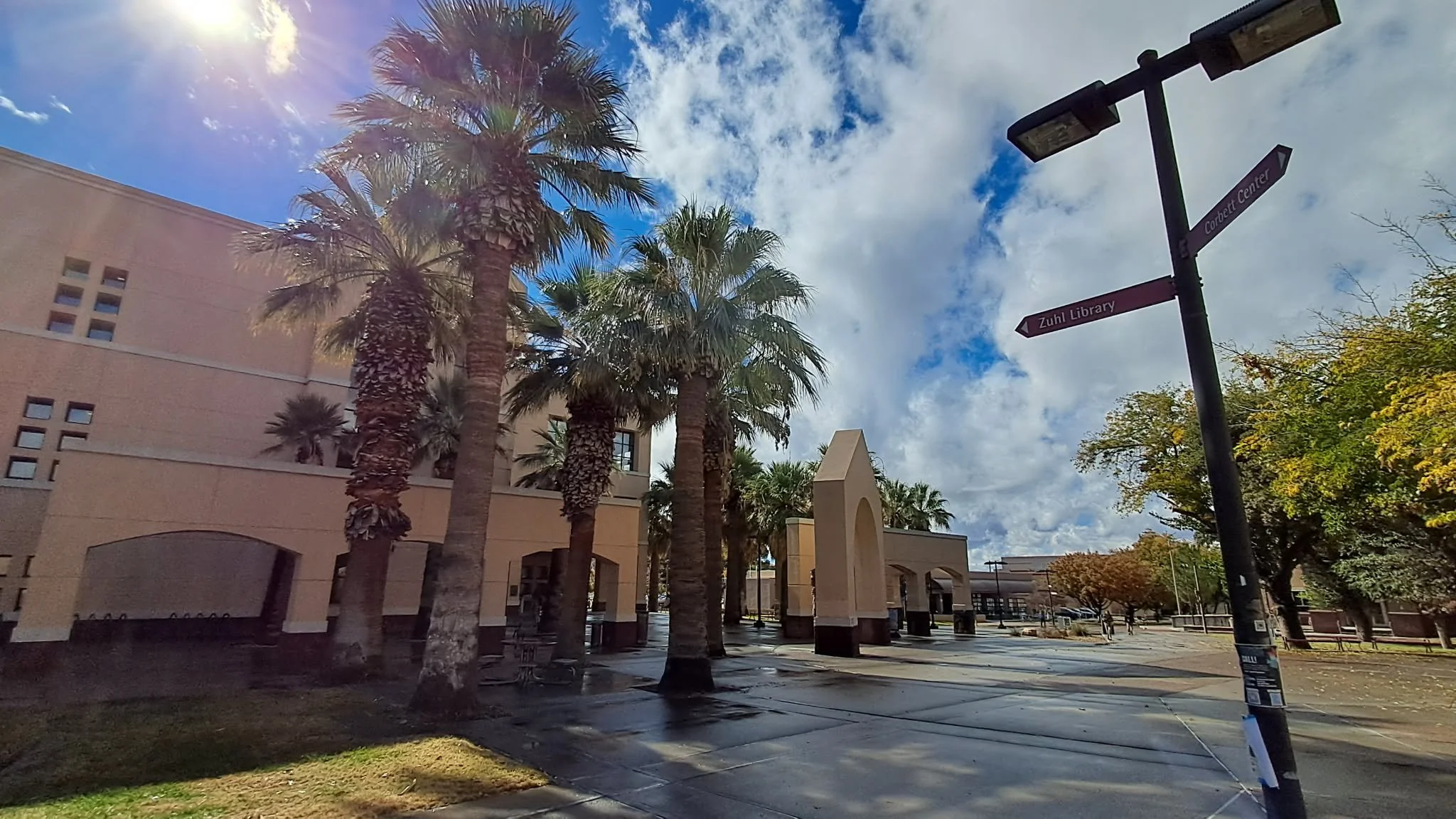
Three newsrooms collaborated to host a sexual-assault panel discussion at Zuhl Library, seen here on the NMSU main campus. The Nov. 20 discussion featured an NMSU equity representative, a sexual assault recovery professional, and the editor of the Round Up student news site.
LAS CRUCES — Three local newsrooms collaborated to host a panel on sexual assault at New Mexico State University and invite community discussion around a high-profile issue on campus.
The discussion covered topics like sexual consent, resources available for students who’ve experienced sexual assault and recent reporting by news organizations about sexual-assault cases at NMSU.
The panel, which took place at Zuhl Library on the main campus Nov. 20, featured:
Aisha Gutierrez, interim director of the NMSU Office of Institutional Equity;
Elizabeth Anne Andrews, editor of the The Round Up student news site; and
Angelica Calderón, executive director of La Pinon Sexual Assault Recovery Services.
Diana Alba Soular, project manager for the Southern New Mexico Journalism Collaborative, was the moderator.
The discussion drew about 10 attendees in-person and was broadcast on the Round Up’s social media. A brown bag lunch was provided by the New Mexico Local News Fund, parent organization of the Southern New Mexico Journalism Collaborative.
Here are five key takeaways from the discussion:
What is sexual assault?
La Piñon and OIE have slightly different definitions of what comprises sexual assault. La Piñon’s includes everything from in-person or online harassment to sexual violence, including rape. OIE follows federal Title IX guidelines that prohibit sexual violence, Gutierrez said. That does cover everything from rape to unwanted touching, in some circumstances.
“For it to qualify as sexual assault under Title IX, it does have to constitute fondling,” Gutierrez said. “So a touch on the shoulder may not constitute, but a touch of any private area with sexual gratification is the key term that we use, would constitute as fondling.”
However, other unwanted touch may fall under the umbrella of sexual harassment, which also is in the purview of OIE. If a student is found liable by the university for carrying out sexual assault or harassment, they could face a variety of disciplinary measures, including expulsion.
2. La Piñon offers assistance on campus
La Piñon hosts a student advocate on the NMSU main campus. Students with concerns relating to sexual assault and sexual violence can talk confidentially with the advocate during regular office hours and get information about their options for help. The nonprofit also recently signed an MOU to host an advocate at Doña Ana Community College.
“She's familiar with campus life, so she's able to help them get connected to services if there's something that needs to be addressed,” Calderón said.
Consult with the advocate from 8:30 a.m. to 3:30 p.m. Tuesdays and Thursdays at O’Donnell Hall, Room 200D.
3. Spotlighting the stories
The Las Cruces Sun-News and the Round Up partnered on sexual assault reporting
Andrews discussed her reporting process behind looking into trends of on-campus sexual assault. She created spreadsheets to log reports filed with the NMSU Police Department and compared those to official campus statistics. Las Cruces Sun-News Editor Jessica Onsurez contributed to the series, as well.
See their stories here:
Data: Here’s what we know about sexual assault, rapes at NMSU
4. About a $1M lawsuit settlement
A lawsuit settled between NMSU and a student who alleged the university hadn’t done enough to prevent sexual assault resulted in a $1 million settlement for the student. Another settlement term is that the university is required to implement a sexual violence prevention training for all students starting this school year.
The university had mandated the training to be taken by October, but has since pushed back the date until next spring.
“We really just need more time for students to be able to access and complete the training,” Gutierrez said.
Gutierrez said the training is online, but some students have pushed back on taking it, saying the topic triggers past trauma. Those students can get an exemption. Others don’t want to take it because they don’t like the subject matter. The university is likely to offer alternative in-person trainings for students who don’t want to participate online, she said.
5. Crisis hot line available 24/7
La Pinon’s sexual violence hot line is available 24-7 every day of the year, including students, Calderón said.
It’s available to anyone, regardless of gender or other demographics, for resources and support in connection to sexual assault: (575) 526-3437
Calderón said events like the panel discussion help raise awareness about sexual assault prevention in the broader community — important because community culture is reflected in the student body. La Piñon, for instance, has been offering trainings around sexual assault prevention to high school students to boost awareness before they even reach a college campus.
“It takes all of us – it takes all of us to make a difference,” she said.